In 1620, a small ship called the Mayflower carried 102 passengers across the Atlantic Ocean. Some were Separatists seeking the freedom to practice their religion, while others came looking for opportunity and a new life. The voyage lasted 66 days. Rough seas, cramped quarters, seasickness, and uncertainty tested nearly everyone aboard.
Their intended destination was much farther south, near the mouth of the Hudson River, in territory connected with the Virginia Company. Instead, the Mayflower arrived far north at Cape Cod. The passengers attempted to continue south, but dangerous waters and difficult conditions forced them to turn back toward the Cape.
That unexpected arrival created a problem. They were now outside the area where they had expected to settle under their original authority. According to William Bradford’s account, some passengers began saying that when they reached land, they would be free to do as they pleased because the agreement governing their planned settlement no longer applied.
That could have created trouble very quickly. More than one hundred people were preparing to begin a settlement in an unfamiliar land just as winter was approaching. Without some kind of agreement about leadership and rules, disagreements could easily have divided them before they had even built their first homes.
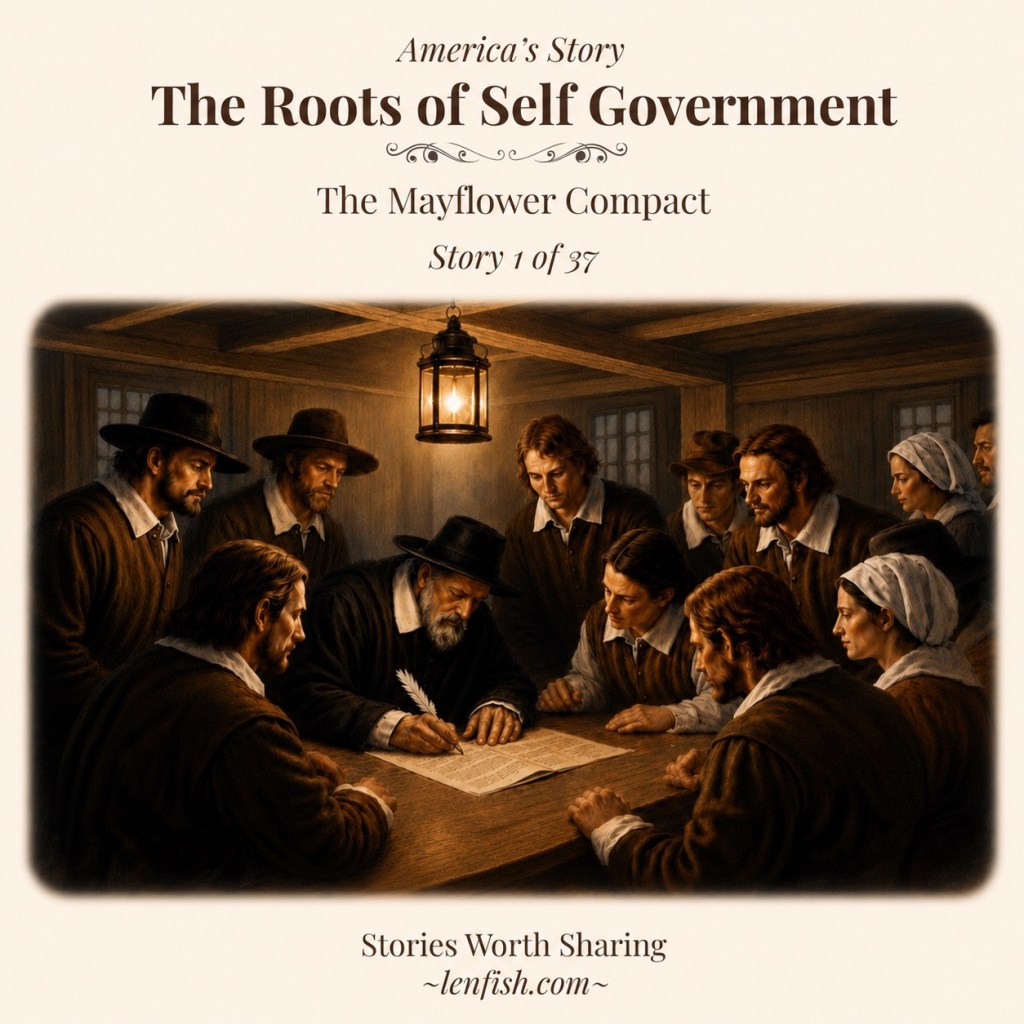
So before leaving the Mayflower, the men aboard created an agreement. Today we call it the Mayflower Compact. They agreed to join together in what the document called a “Civil Body Politic” and to establish laws for the general good of the colony. It wasn’t a declaration of independence. They still declared themselves loyal subjects of King James. But they were agreeing that their new community needed rules—and that they would submit to the rules they created together.
Traditionally, 41 men are identified as having signed the Compact. Women, children, and most servants were not among the signers, reflecting the political and social customs of the time. The original document has been lost, so what we know today comes from surviving copies and early accounts.
The settlers eventually chose Plymouth for their new home. But they were not arriving in an untouched wilderness. The site was Patuxet, a Wampanoag community that had been devastated by disease before the Mayflower arrived. The settlers began building while continuing to live aboard the ship, returning to shore to work.
Then came the first winter. Cold, sickness, poor living conditions, and inadequate shelter took a terrible toll. About half of the Mayflower passengers died. During those difficult months, cooperation wasn’t simply a political idea. Their survival depended upon people working together.
Spring brought an important change. The colonists developed relationships with the Wampanoag and received critical help in learning about the land and local conditions. Tisquantum, commonly known as Squanto, became especially important as an interpreter and intermediary. The survival of Plymouth cannot be told accurately without including the Native people who were already there.
The Mayflower Compact did not create American democracy, and it certainly did not give everyone an equal voice. But it represented an important idea: when circumstances changed, a group of people agreed that order should come through shared rules and cooperation rather than everyone simply doing whatever they wanted.
Perhaps that is what makes a short agreement written aboard a crowded ship more than four hundred years ago worth remembering. The passengers could not know what was ahead of them. They couldn’t control the weather, the winter, disease, or many of the hardships they would face.
But they could decide how they would face those uncertainties together.
References (Resources)
1. William Bradford, Of Plymouth Plantation — A firsthand account written by Mayflower passenger and Plymouth governor William Bradford. His history describes the Mayflower voyage, the circumstances surrounding the Mayflower Compact, and the early years of Plymouth Colony. The original manuscript is held by the State Library of Massachusetts.
2. Plimoth Patuxet Museums — Provides historical research on the Mayflower voyage, the Mayflower Compact, Plymouth Colony, Patuxet, and the relationship between the English colonists and the Wampanoag people.
3. Library of Congress — Provides digitized early histories and journals relating to Plymouth Colony, including works associated with William Bradford and Edward Winslow, along with historical materials relating to the Mayflower Compact and the founding of Plymouth Colony.

