I remember getting new shoes as a kid, and for me it was magical. Growing up with nine siblings makes you realize how precious it was to get new shoes. Growing up in the 60s and 70s, shoes were made to last. They were made of genuine leather. You would usually outgrow your shoes before they wore out.
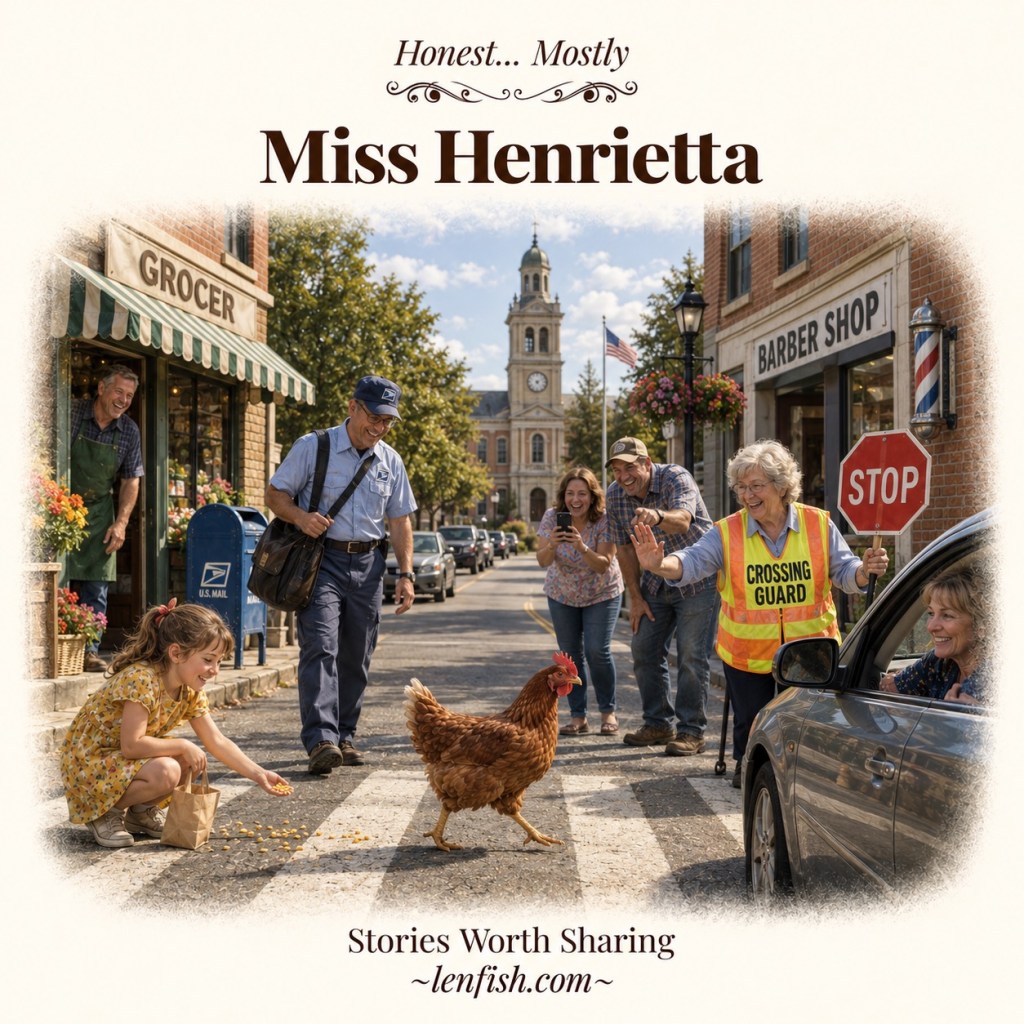
One quiet Tuesday morning, a chicken wandered into town as if it had important business to attend to. No one knew where it came from. It simply strutted down Main Street with the confidence of someone who had lived there for years. At first, people assumed it belonged to a nearby farm and would eventually wander back home.
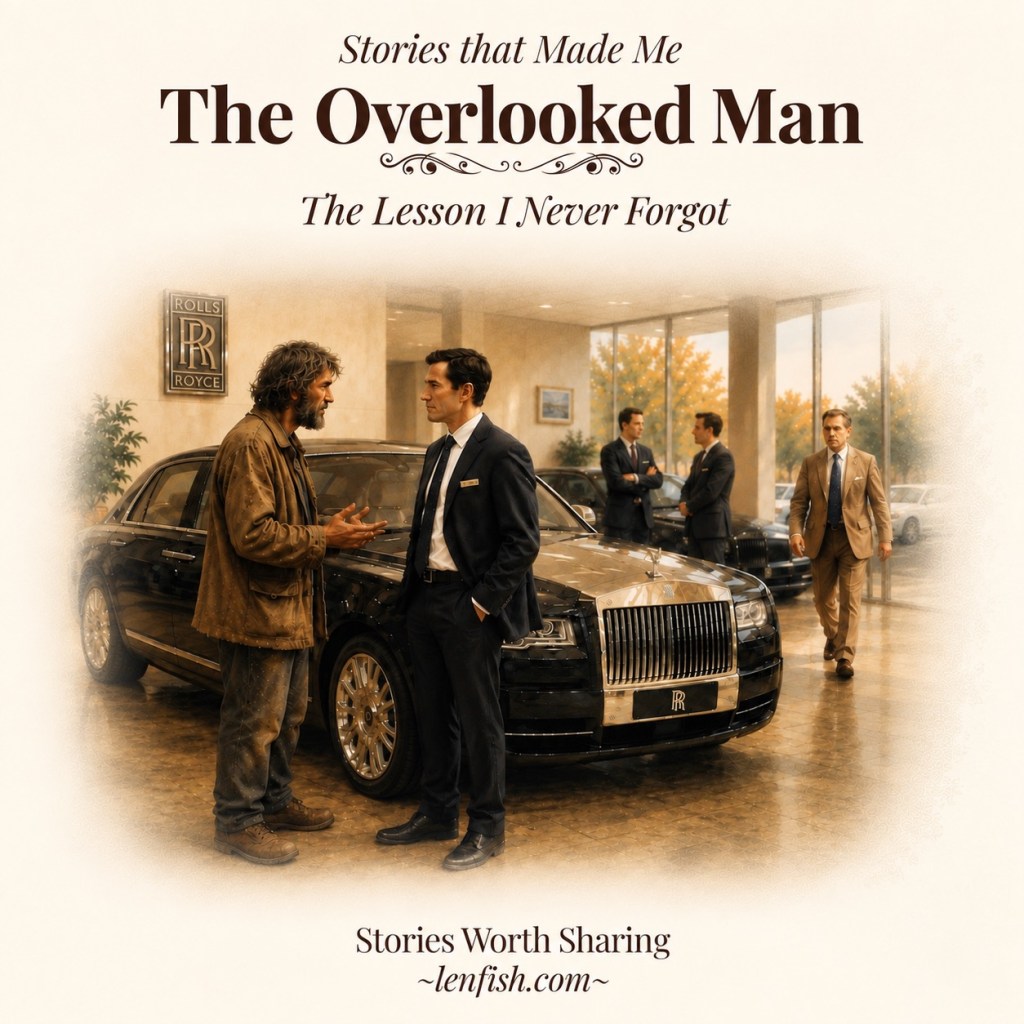
My dad told me a story years ago that I’ve never forgotten. At the time, he was a teacher at East High School in Salt Lake City, Utah. One of his former students, Mike, owned a car dealership that specialized in high-end automobiles. One day my dad stopped by to say hello and, during their visit, asked, “Mike, tell me one of your most interesting stories from the dealership.”
Mike smiled and began telling him about a customer who had walked through the front doors only a few months earlier. The man looked like he had fallen on hard times. It wasn’t unusual for homeless men and women to wander into the showroom during the winter just to warm up for a while, and this man spent most of his time looking at the Rolls-Royce automobiles.
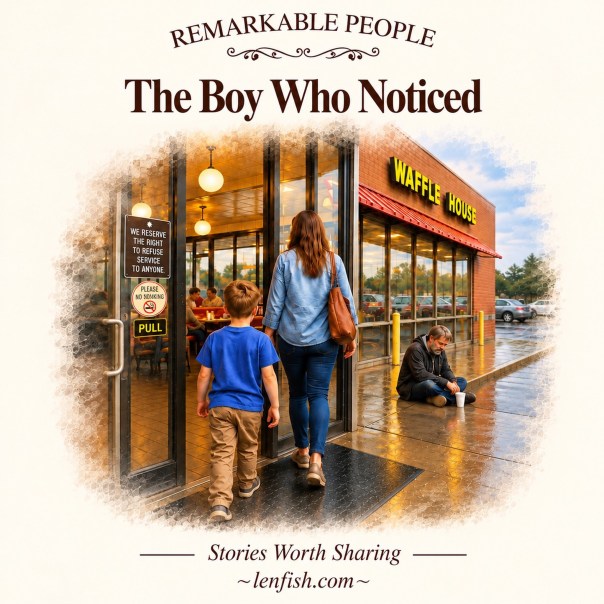
Five-year-old Josiah Duncan sat inside a Waffle House with his mother when he noticed a homeless man standing quietly outside the restaurant. Josiah kept asking why the man had no food and finally begged his mother to invite him inside for a meal. When the man sat down at the booth, Josiah handed him a menu and smiled as if they had known each other forever.
There is something tempting about looking at an old rule, tradition, or way of doing things and thinking, “We don’t need this anymore.” Sometimes we’re right. The world changes, circumstances change, and ideas that once made sense can outlive their usefulness. But before we tear down the fence, there is one important question worth asking: Why was it built in the first place?
For many years, I wondered why people could look at the same act of kindness and respond so differently. One person would light up over a thoughtful gift. Another barely noticed the gift but treasured an afternoon spent together. Some people seemed to remember every compliment they had ever received, while others never forgot a hug when they needed one most. At the time, I didn’t understand why.
Years later, I picked up Gary Chapman’s book The Five Love Languages. As I read, something unexpected happened. It wasn’t just another relationship book. Faces began filling my mind. I realized I had been seeing these love languages my entire life without recognizing them.
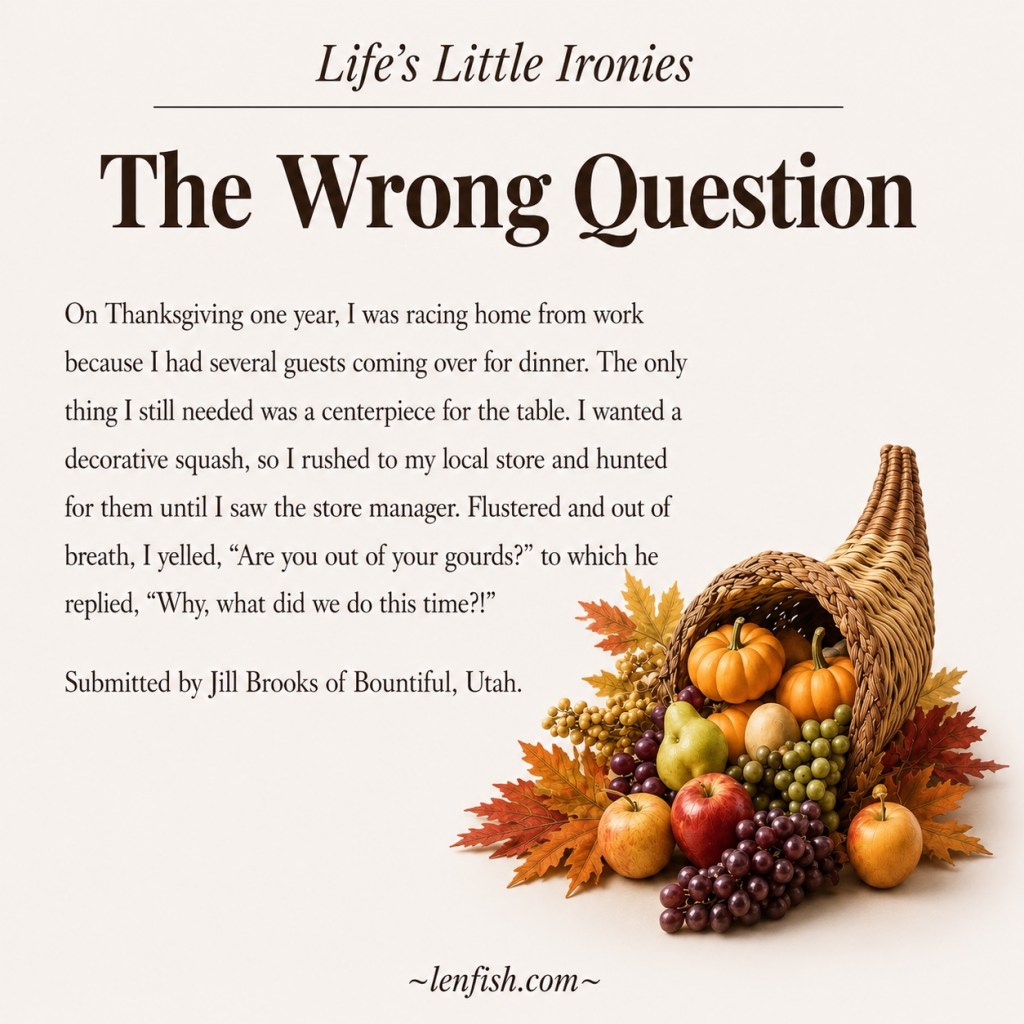
Thanksgiving can be stressful enough without accidentally accusing the store manager of losing his mind. Jill Brooks only wanted a few decorative gourds for her dinner table. Instead, she asked a question that probably made the manager wonder what he’d done wrong this time. At least she went home with a story worth sharing—even if she never found the gourds!
If you missed the last story, A Haunted House, it’s about a sixth grader who got so scared that the haunted house actors had to stop frightening people and start reassuring him!
When I was in first grade, I was a slow learner. Watching the other kids in my class grasp concepts quickly while I struggled was painful. At our school, we read Sam and Ann books. I was stuck in book 2 while many of my classmates had advanced to book 10. The smartest kid in the class was already in book 13. I was amazed that anyone could be so far ahead of the rest of us.
Every time a child moved up to the next book level, they were rewarded with a piece of candy. The day finally came when I advanced to book 3. I was thrilled! My teacher was proud of me too. She reached into her desk to give me a piece of candy but found that she didn’t have any left. After searching, she found a stick of gum instead. She handed it to me and said, “Leonard, I’ll give you this gum if you promise not to chew it until you get home.” I eagerly agreed.
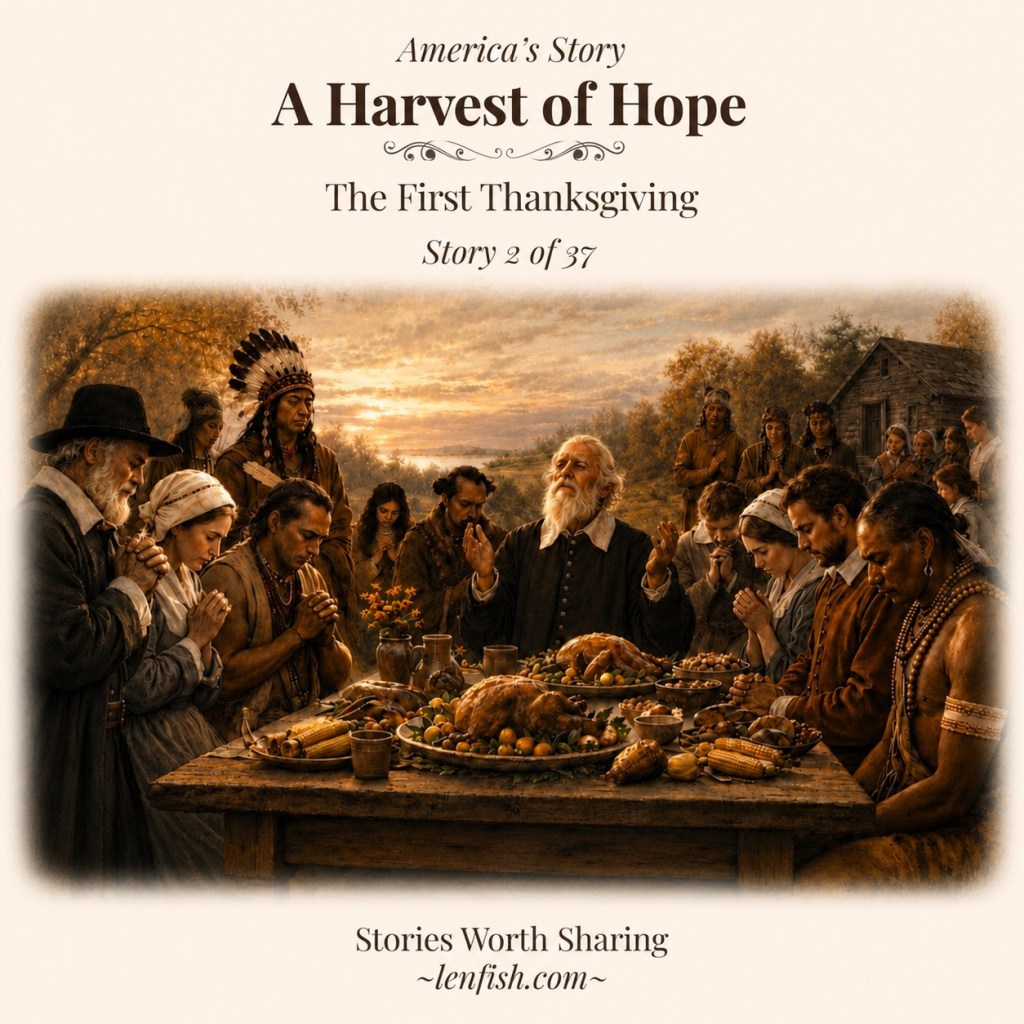
In the autumn of 1621, the small settlement at Plymouth Colony prepared to celebrate a successful harvest. Only a year earlier, the settlers had arrived weak and uncertain after a long journey across the Atlantic, unsure of what the future would hold for them.
The months leading to this moment had been filled with hardship and loss. The first winter brought freezing temperatures, widespread illness, and inadequate shelter. About half of the Mayflower passengers did not survive, and those who remained carried their grief forward while continuing the difficult work of building a settlement.
The other day, a good friend called me out of the blue. It was still September, and he said, “You won’t believe what I heard on the radio.” He knew I liked Christian music, so I asked, “Was it Christian music?” He thought I said Christmas music. “Yes! Christmas music!” he said. “I heard it and thought of you. I know how much you love Christmas music.” He was right.